On June 5 to June 6, the flagship Sci-Tech Empowering Rural Transformation: 2026 Climate Resilience and Green Transition Dialogue was held in Jinta county, Jiuquan city, Gansu province. Building on the outcomes and networks established through previous events in the series, the dialogue combined thematic discussions with field visits across various sites in Jiuquan, showcasing scalable, innovative practices that contribute to the United Nations Decade on Ecosystem Restoration (2021–2030) and support national pathways toward carbon neutrality and climate-resilient development.
On the morning of June 6, some of the people who attended visited an International Fund for Agricultural Development (IFAD)-supported site known as the Gobi Desert Agricultural Industrial Demonstration Park in Jiuquan’s Suzhou district in order to learn more about an innovative Gobi agriculture model and the advanced cultivation techniques and technologies that are in use and the ecological agriculture achievements that have been made in the area.
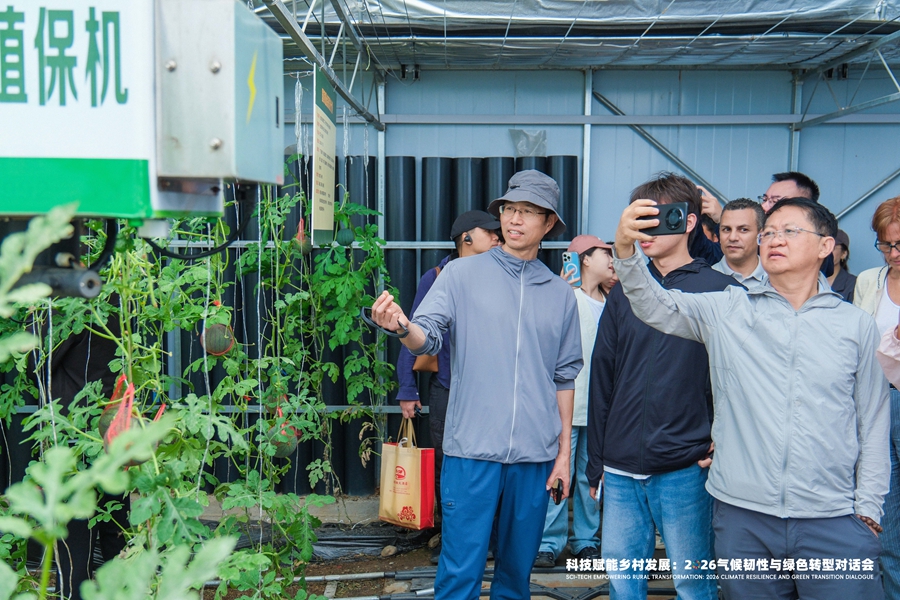
Sci-Tech Empowering Rural Transformation: 2026 Climate Resilience and Green Transition Dialogue attendees visit the Gobi Desert Agricultural Industrial Demonstration Park, which is located in Suzhou district, Jiuquan city, Gansu province, on June 6.
Desertification remains a major global environmental challenge. In response, China has pursued a range of solutions, including greening and afforestation, water-saving irrigation, and greenhouse-based cultivation systems that improve land-use efficiency and reduce pressure on scarce arable land.
Widely recognized as a pioneer of Gobi ecological agriculture, Jiuquan began experimenting with greenhouses on barren Gobi land in 2007. Nearly two decades later, facility-based agriculture covers more than 202,000 mu (13,500 ha) of land in the city, demonstrating the potential of agriculture to thrive in arid environments.
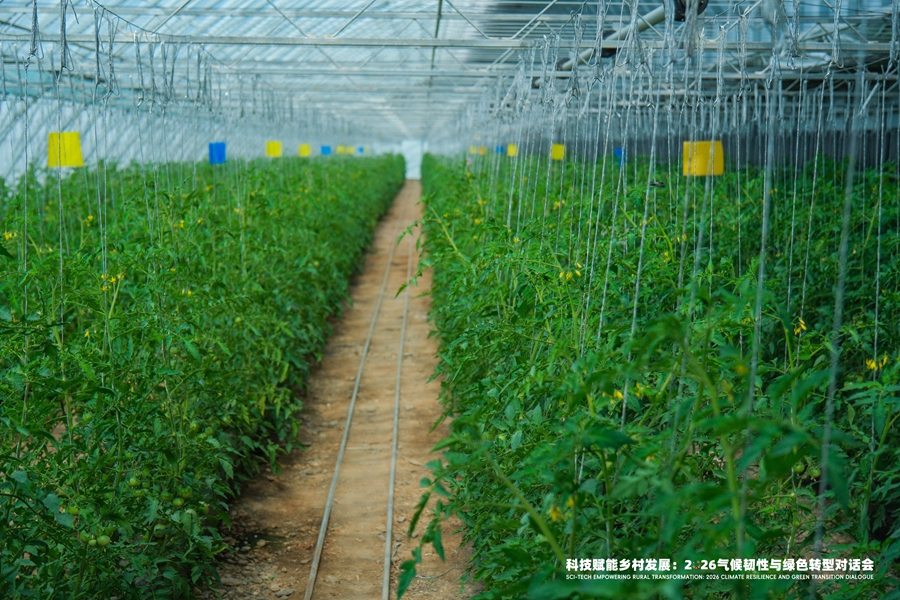
A view of a tomato greenhouse demonstration project at the Gobi Desert Agricultural Industrial Demonstration Park on June 6
The group that visited the Gobi Desert Agricultural Industrial Demonstration Park explored the rows of standardized greenhouses that exist at the site. Each greenhouse measures approximately 80 m in length and 10 m in width, with walls that stand 3.8 m and a roof that has a ridge height of 5.9 m. The structures utilize various wall designs, including brick-concrete and aerated-block construction. Built on previously unused and wasteland area, including part of the Gobi Desert, the facilities expand agricultural production without competing with grain cultivation on valuable farmland.
The greenhouse agriculture model that is utilized also promotes the recycling of agricultural byproducts, including crop straw and livestock manure, supporting a more circular and sustainable agricultural system, and achieves significant resource-efficiency gains. Water consumption is reduced by nearly 50% as compared with conventional open-field cultivation, while fertilizer use is approximately 40% lower.
The park produces a wide range of fruits and vegetables, including locally developed melon varieties. Abundant sunlight and large variations between daytime and nighttime temperatures contribute to quality, flavor and market competitiveness.
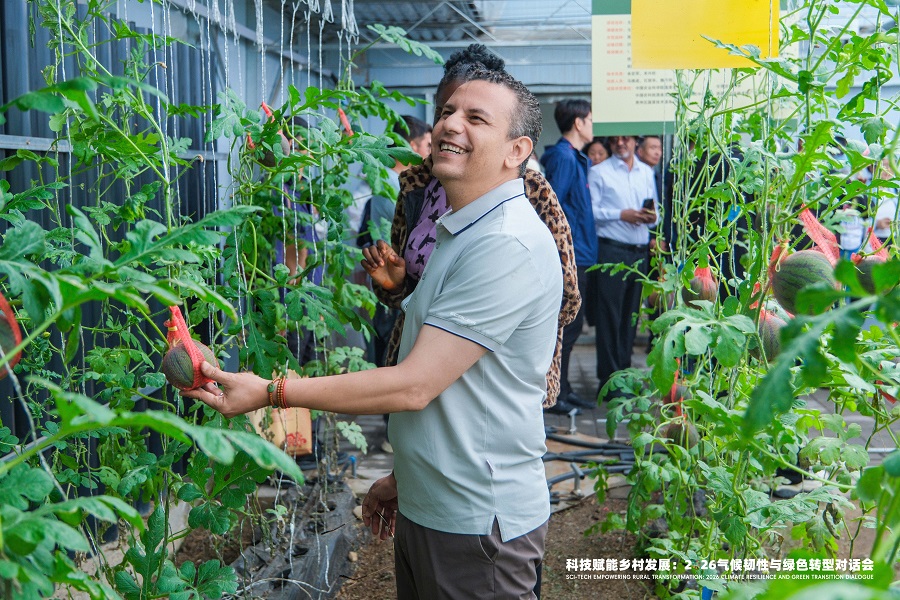
A Sci-Tech Empowering Rural Transformation: 2026 Climate Resilience and Green Transition Dialogue attendee examines a melon at the Gobi Desert Agricultural Industrial Demonstration Park on June 6.
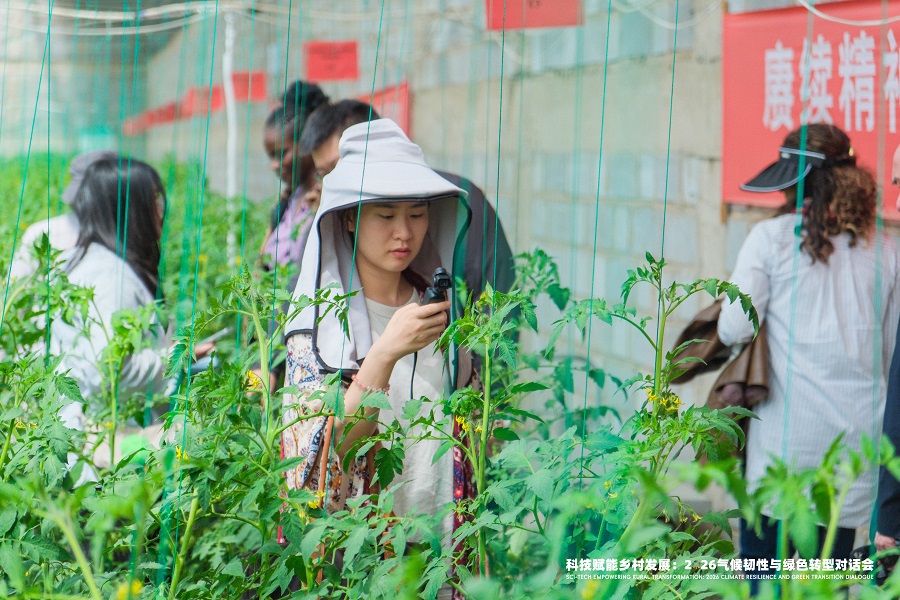
Sci-Tech Empowering Rural Transformation: 2026 Climate Resilience and Green Transition Dialogue attendees examine crops in a greenhouse at the Gobi Desert Agricultural Industrial Demonstration Park on June 6.
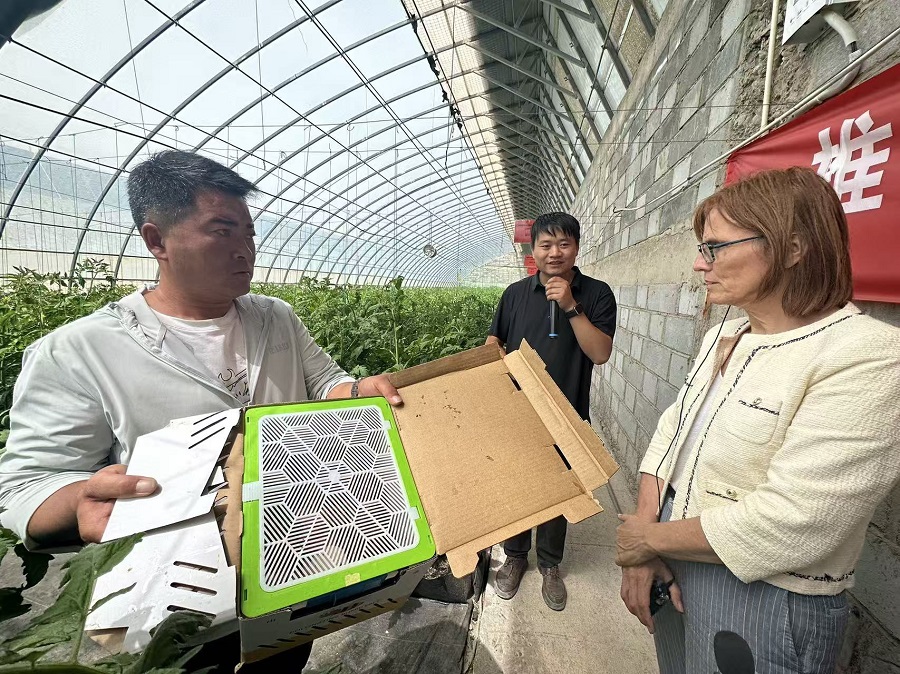
Li Junguo (left), a farmer from Jiuquan’s Dongdong town, introduces a greenhouse beehive to an attendee at the Gobi Desert Agricultural Industrial Demonstration Park on June 6.
The park incorporates a range of modern cultivation techniques and technologies. Substrate cultivation systems, including trough, bag, and pillow cultivation methods, are integrated with centralized seedling production, water-and-fertilizer management systems, and intelligent environmental controls.
Greenhouse operators have the ability to monitor and adjust growing conditions through mobile applications. Biological pest management techniques, including the introduction of beneficial insects, placement of sticky traps, and utilization of light-based insect control systems, have further reduced reliance on chemical pesticides while improving food safety and environmental sustainability.
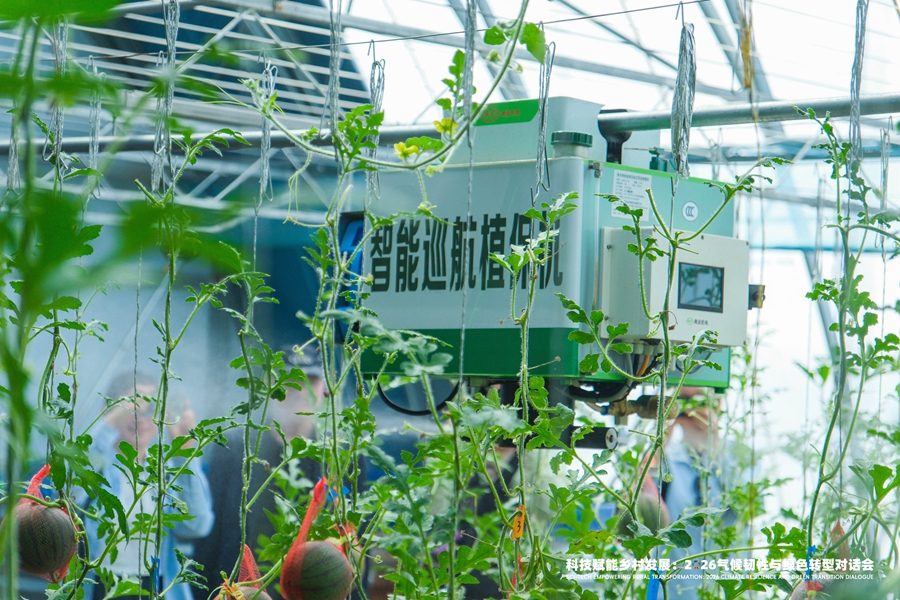
A view of some of the equipment in use at a greenhouse located at the Gobi Desert Agricultural Industrial Demonstration Park on June 6. The greenhouses at the park are equipped with advanced cultivation equipment, including water-and-fertilizer management systems and intelligent environmental controls.
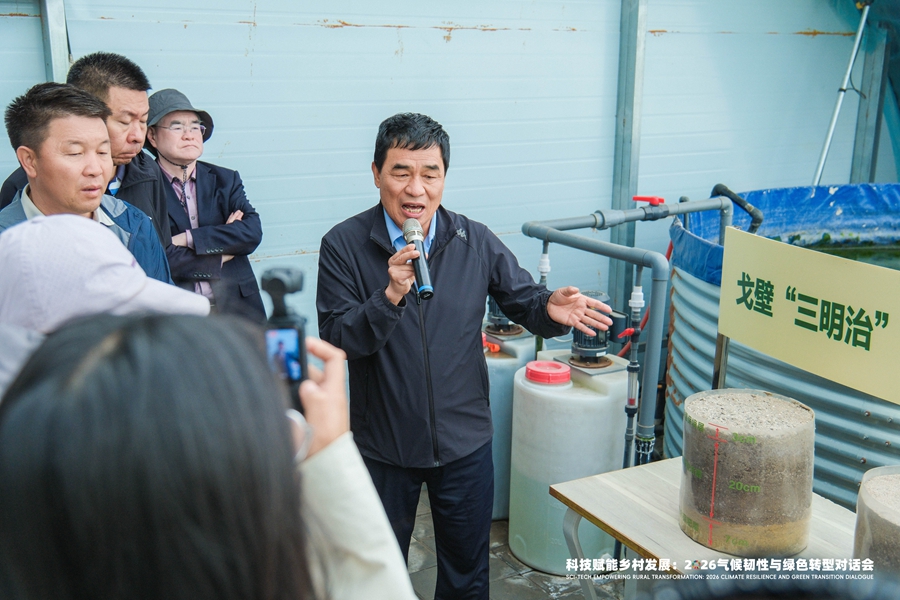
Zhang Guosen (right), research fellow at the College of Bioengineering, Jiuquan Vocational Technical University, describes substrate cultivation techniques to some of the people who attended the Sci-Tech Empowering Rural Transformation: 2026 Climate Resilience and Green Transition Dialogue at the Gobi Desert Agricultural Industrial Demonstration Park on June 6.
Jiuquan has established an organization known as the Jiuquan Gobi Ecological Agriculture Research Institute as well as an academician and expert workstation while also maintaining close cooperation with the Chinese Academy of Agricultural Sciences in order to advance the research and development of new crop varieties and agricultural techniques and technologies.
The park also features an agricultural science education zone, where visitors can learn about modern farming practices through interactive exhibits, sand-table models, microscopes and other educational tools.
IFAD supports ongoing and newly launched projects that enhance the application of climate-adaptive techniques and technologies in specialty agricultural industries and strengthen inclusiveness for vulnerable groups in rural Gansu. It promotes greater green energy deployment, rural waste and wastewater treatment, and agricultural waste recycling, contributing to rural vitalization and sustainable development while offering demonstration models that can be replicated widely.
As part of these efforts, IFAD plans to help modernize and upgrade facility agriculture in the Gobi Desert region through the systematic renovation of 682 greenhouses that currently suffer from aging infrastructure and low production efficiency in the park and will also promote smart, automated, and standardized greenhouse production through a differentiated management approach based on facility classification.
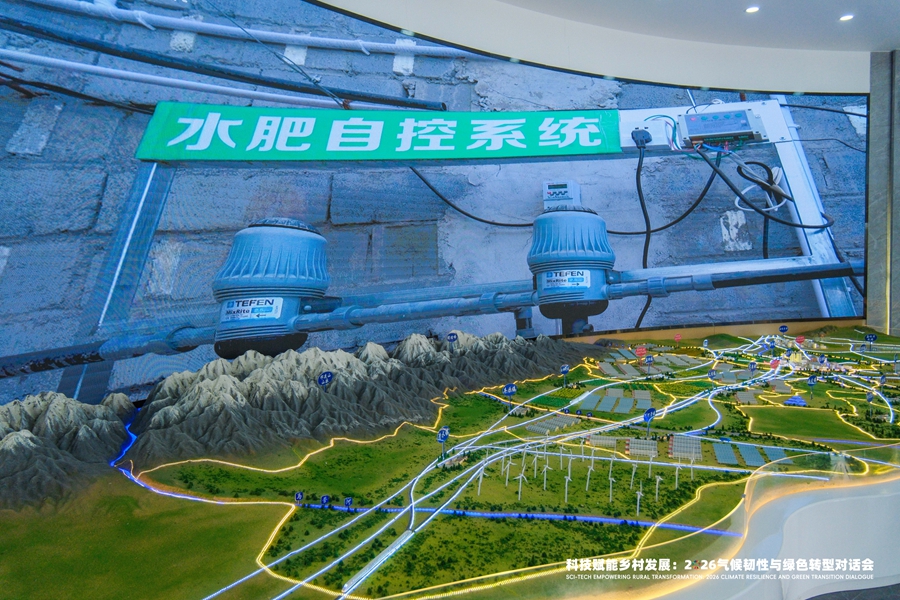
A view of a scale model of the Gobi Desert Agricultural Industrial Demonstration Park on display at the site on June 6
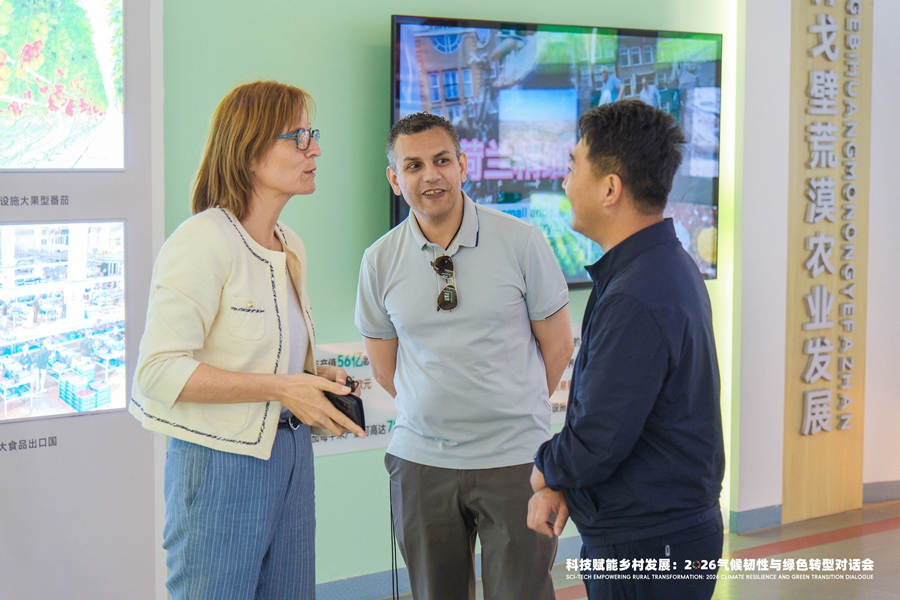
Two Sci-Tech Empowering Rural Transformation: 2026 Climate Resilience and Green Transition Dialogue attendees discuss agricultural techniques and technologies with Jia Qi (right), deputy director of the Vegetable Research Institute at the Jiuquan Academy of Agricultural Sciences, at the Gobi Desert Agricultural Industrial Demonstration Park on June 6.
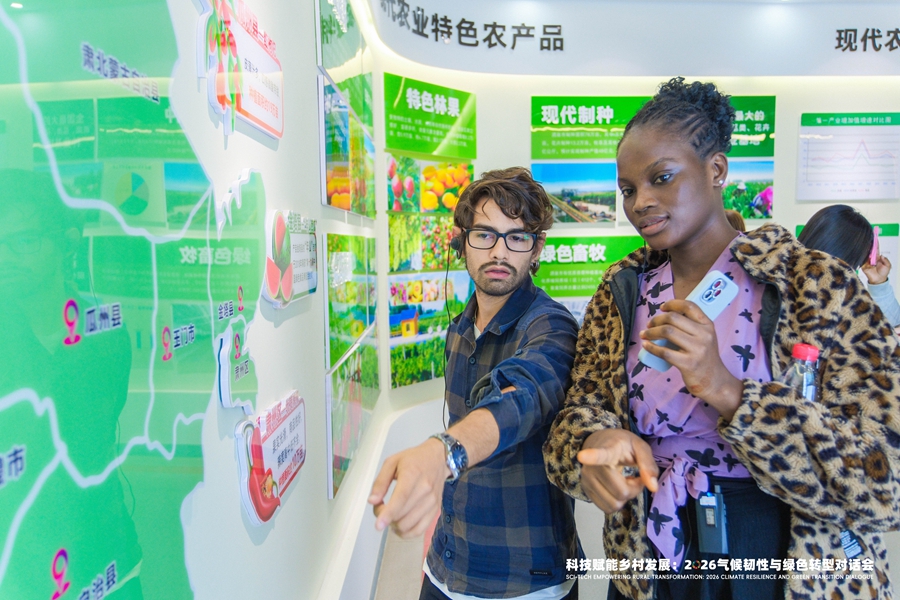
Two Sci-Tech Empowering Rural Transformation: 2026 Climate Resilience and Green Transition Dialogue attendees study a display at the Gobi Desert Agricultural Industrial Demonstration Park’s agricultural science education exhibition area on June 6.
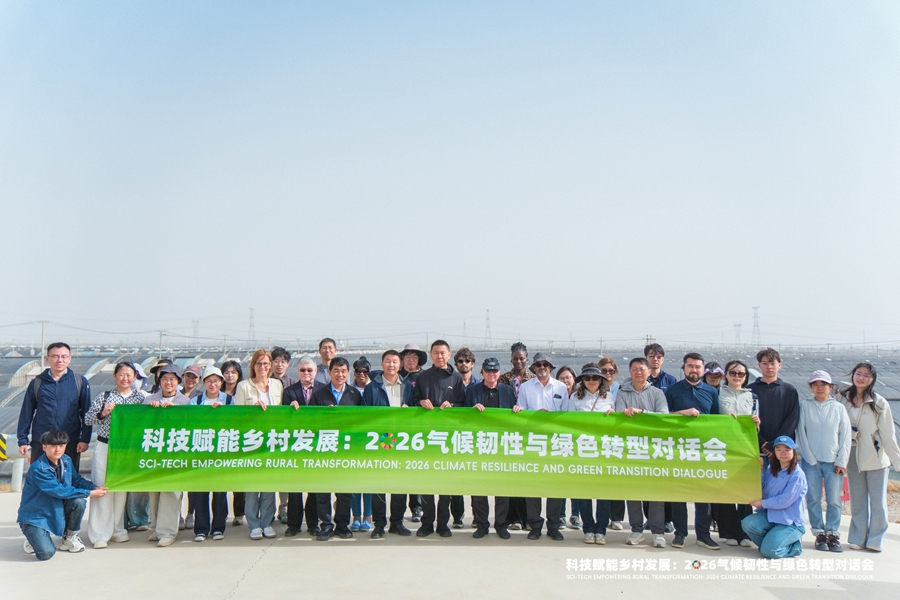
The Sci-Tech Empowering Rural Transformation: 2026 Climate Resilience and Green Transition Dialogue attendees that visited the Gobi Desert Agricultural Industrial Demonstration Park pose for a photo on June 6.
The Sci-Tech Empowering Rural Transformation: 2026 Climate Resilience and Green Transition Dialogue was jointly organized by the China Internet Information Center (CIIC), the Food and Agriculture Organization of the United Nations (FAO) Representation in China, the IFAD China Office, the Centre for Sustainable Agricultural Mechanization of the United Nations Economic and Social Commission for Asia and the Pacific (ESCAP-CSAM), and the United Nations Development Programme (UNDP) in China. It was also supported by the China Green Foundation – a civil society organization that promotes greening and afforestation as well as environmental awareness – and by the Ant Forest Foundation – an organization that was launched by the Ant Financial Services Group, an affiliate of e-commerce company Alibaba, engaged in greening and afforestation as well as other forms of environmental protection that also encourages people to adopt environmentally friendly lifestyles.
More than 100 people attended the dialogue either in person or online, representing eight countries and a diverse range of stakeholders, including eight international organizations, government agencies, embassies in China, United Nations entities, research institutions, private-sector partners, civil society organizations, beneficiary farmers and the media.