On June 5, the flagship Sci-Tech Empowering Rural Transformation 2026 Climate Resilience and Green Transition Dialogue event began in Jinta county, Jiuquan city, Gansu province. Building on the outcomes and networks established through previous events in the series, the dialogue combined thematic discussions with field visits, showcasing scalable, innovative practices that contribute to the United Nations Decade on Ecosystem Restoration (2021-2030) and support national pathways toward carbon neutrality and climate-resilient development, and continued into June 6 across various sites in Jiuquan.
More than 100 people attended either in person or online, representing eight countries and a diverse range of stakeholders, including eight international organizations, government agencies, embassies in China, United Nations entities, research institutions, private-sector partners, civil society organizations, beneficiary farmers and the media.
On the morning of June 5, some of the people who attended visited an Ant Forest project site on the western edge of the Badain Jaran Desert in order to learn more about the achievements that Jinta has made with regard to the combination of desertification control and the creation of new economic opportunities for local communities. The Ant Forest Foundation is an organization that was launched by the Ant Financial Services Group – an affiliate of e-commerce company Alibaba – that encourages people to adopt environmentally friendly lifestyles and also engages in greening and afforestation as well as other forms of environmental protection.
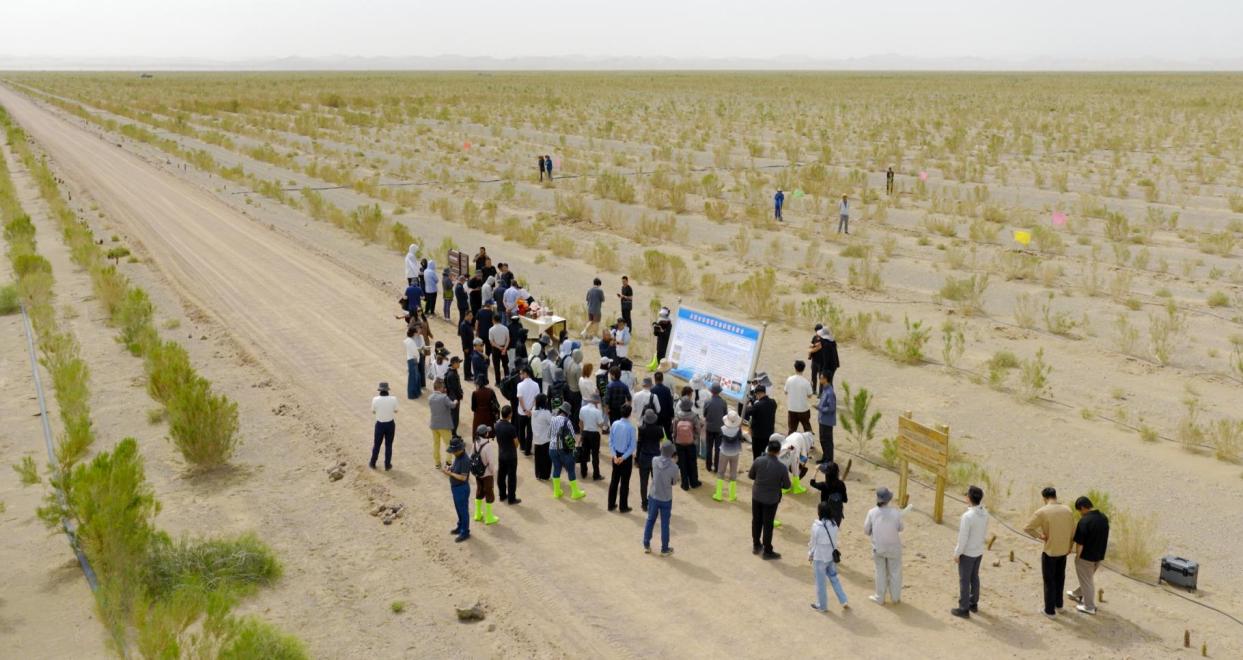
A view of the people who attended the Sci-Tech Empowering Rural Transformation 2026 Climate Resilience and Green Transition Dialogue and also visited the Ant Forest project site in Jinta county, Jiuquan city, Gansu province, on the morning of June 5.
Encompassing a total area of 18,800 sq. km (1.88 million ha), Jinta is situated between the Badain Jaran Desert and the Kumtag Desert. Within its borders, four major sand systems – Baishui Spring, Mingshawo Sand Basin, Dongshawo Sand Basin, and the forefront of the Badain Jaran Desert – span over 160 km. The desertified area covers 18.16 million mu (1.21 million ha), accounting for 64% of the county’s total land area, making Jinta one of the most severely desertified and sand-encroached county-level administrative areas in Gansu Province.
Guided by the principle of “industrializing ecological restoration and ecologicalizing industrial development,” Jinta has encouraged more than 20 agricultural enterprises and cooperatives to participate in both desertification control and the development of desert-based industries. Together they have established an ecological shelterbelt that spans more than 50 km along the western edge of the Badain Jaran Desert, which has helped curb the westward expansion of the desert.
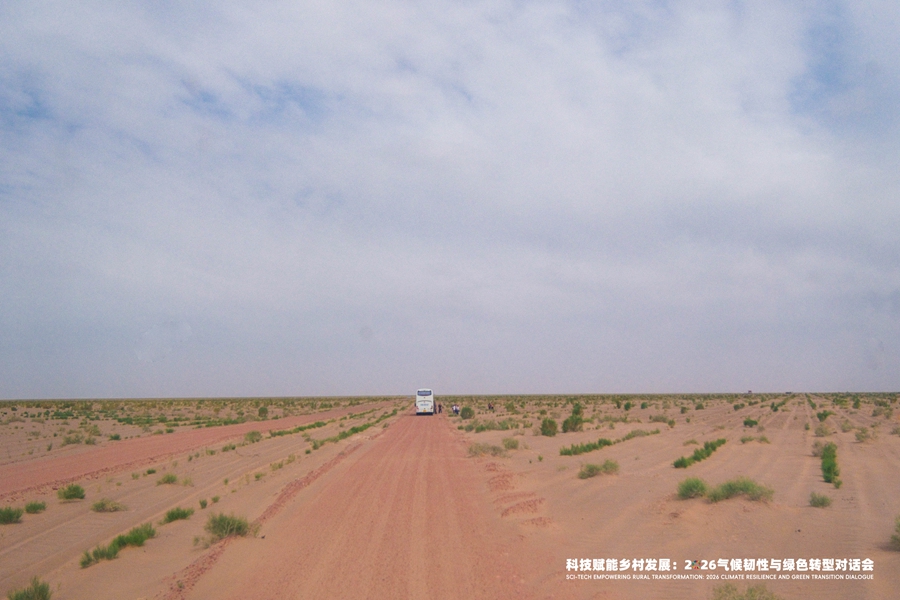
A view of saxaul shrubs growing in Jinta on June 5
A key component of the campaign to integrate environmental restoration with rural economic development while strengthening ecological barriers against wind erosion and sandstorms in the county is the cultivation of desert-broomrape (Cistanche deserticola), which is often referred to as “soft gold of the desert.” The valuable edible and medicinal plant grows parasitically on the roots of the saxaul tree (Haloxylon ammodendron), a hardy species widely recognized for its ability to help stabilize sand and restore desert ecosystems.
Leveraging extensive saxaul plantations, local communities have developed an economic development and environmental protection model in which desert-broomrape is inoculated onto saxaul roots, creating a sustainable source of income while maintaining the ecological benefits of greening.
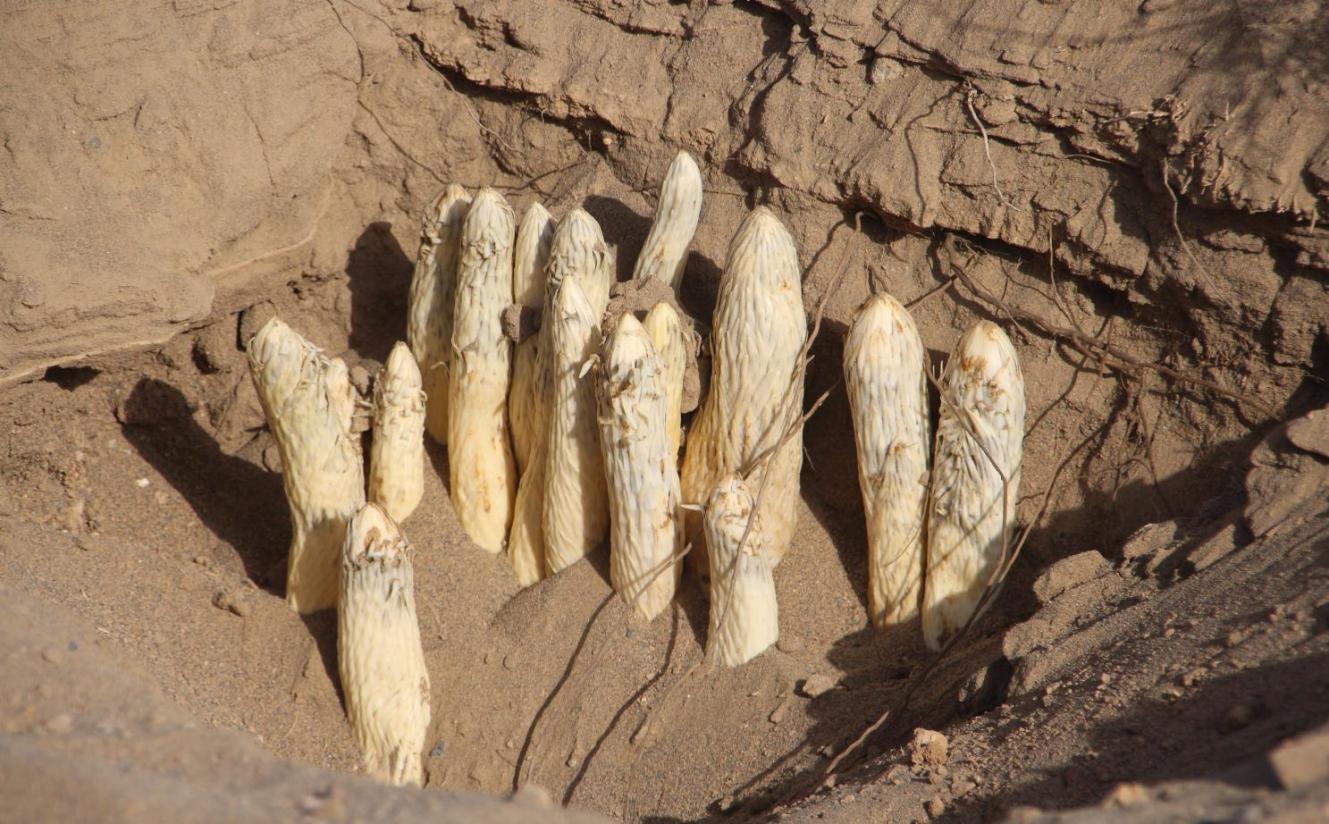
A view of desert-broomrape plants growing on the roots of a saxaul tree in Jinta on June 5
The group that visited the Ant Forest project site in Jinta observed desert-broomrape plants and learned about relevant cultivation practices. On-site presentations, discussions with local farmers, and hands-on harvesting experiences enabled the people in this group to gain a deeper understanding of the ecological benefits of saxaul-based desertification control endeavors, the efficacy of local restoration efforts, and the economic potential of the desert-broomrape industry. Many of the visitors praised Jinta’s innovative approach to combining environmental restoration with sustainable rural development.
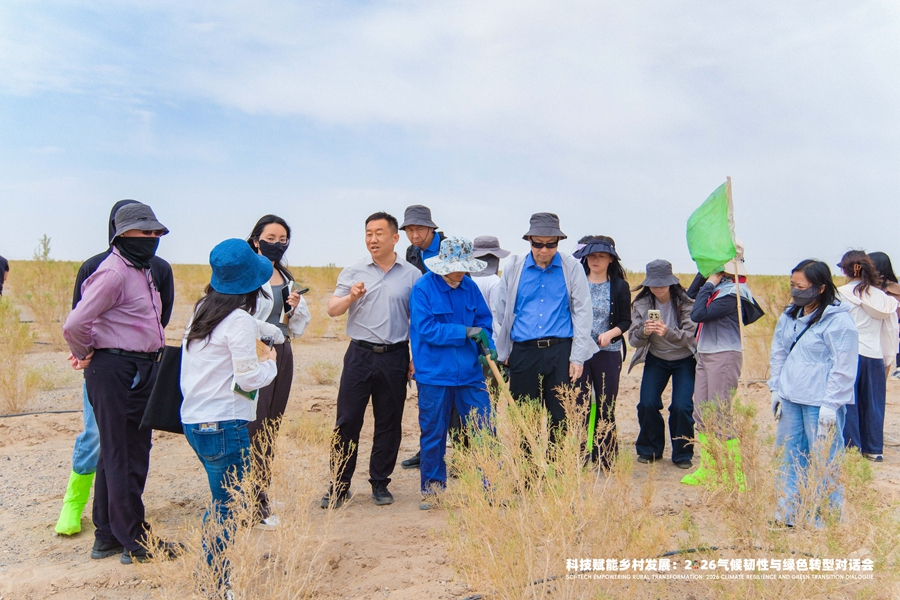
A farmer (wearing blue and a white hat) demonstrates how to harvest desert-broomrape on June 5 in Jinta.
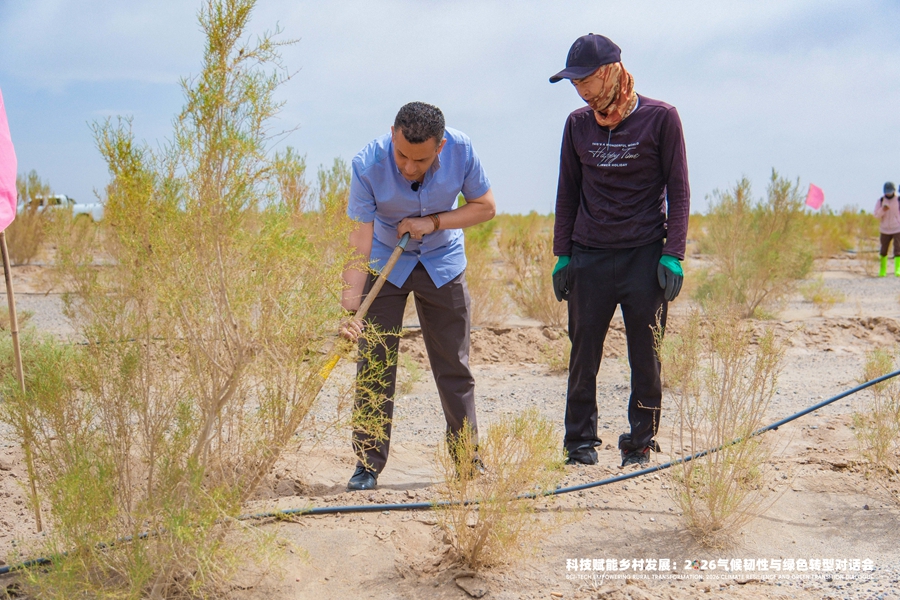
A Sci-Tech Empowering Rural Transformation 2026 Climate Resilience and Green Transition Dialogue attendee harvests desert-broomrape in Jinta on June 5.
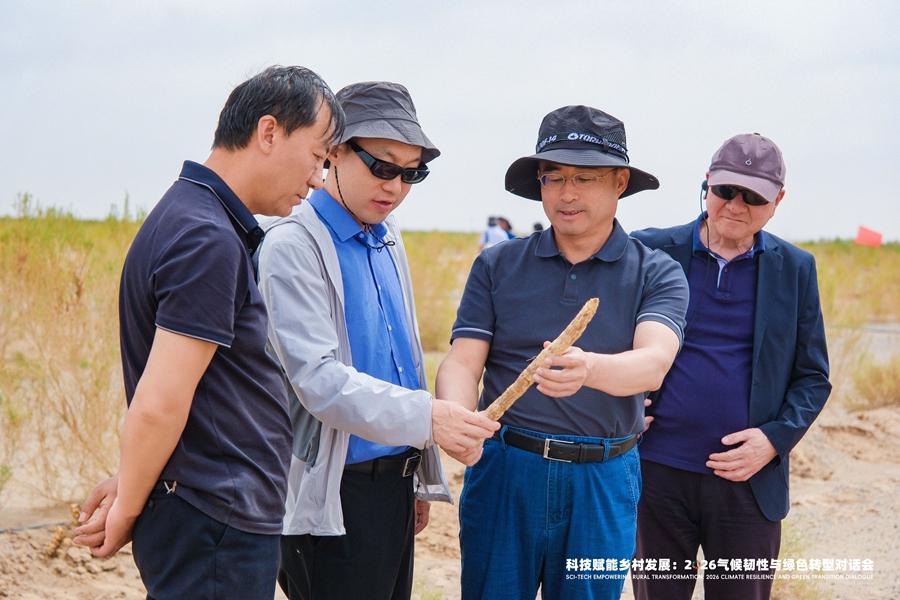
A farmer describes characteristics of the desert-broomrape plant to some Sci-Tech Empowering Rural Transformation 2026 Climate Resilience and Green Transition Dialogue attendees on June 5 in Jinta.
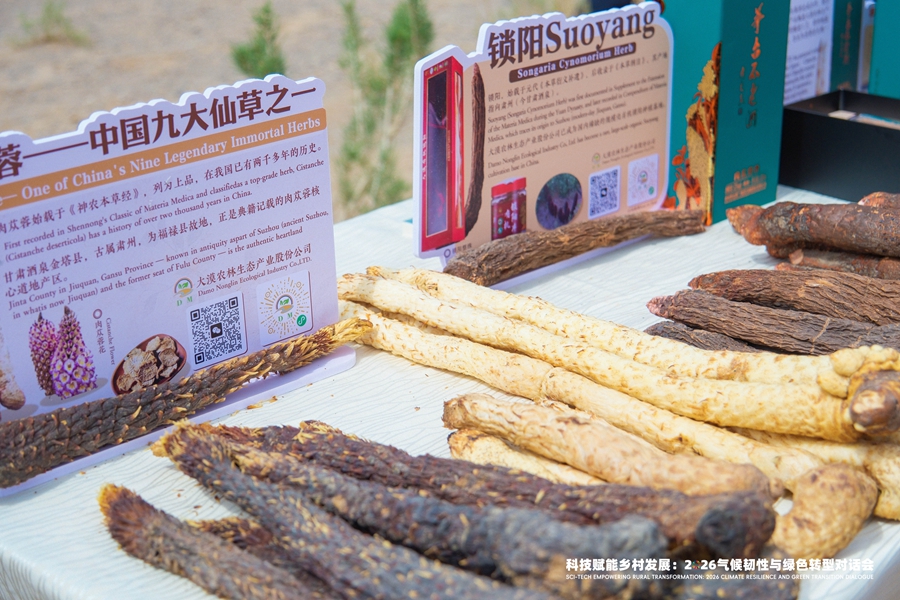
Desert-broomrape and a potent traditional Chinese medicinal plant known as Suo Yang (Cynomorium) on display at the Ant Forest project site in Jinta on June 5
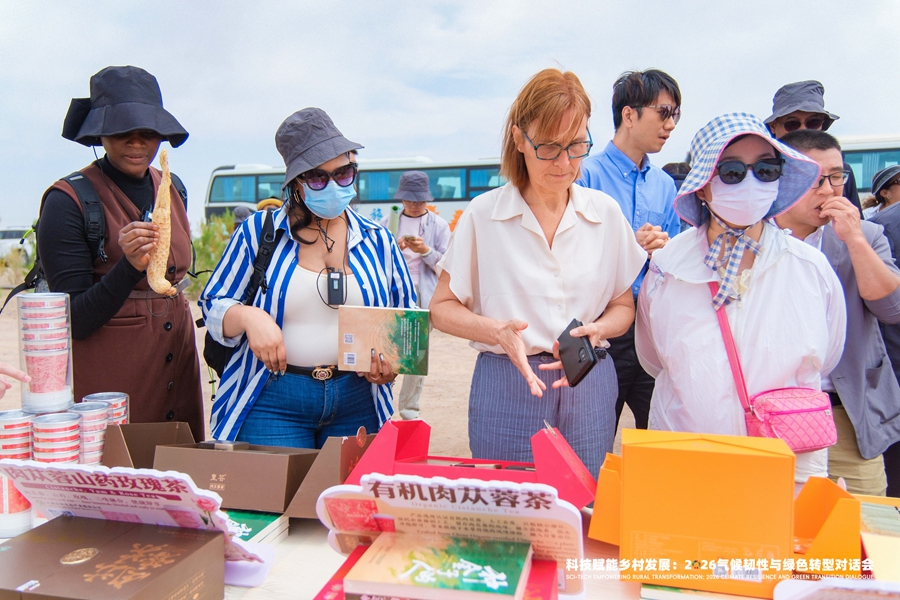
Visitors examine locally processed desert-broomrape products on display at the Ant Forest project site in Jinta on June 5.
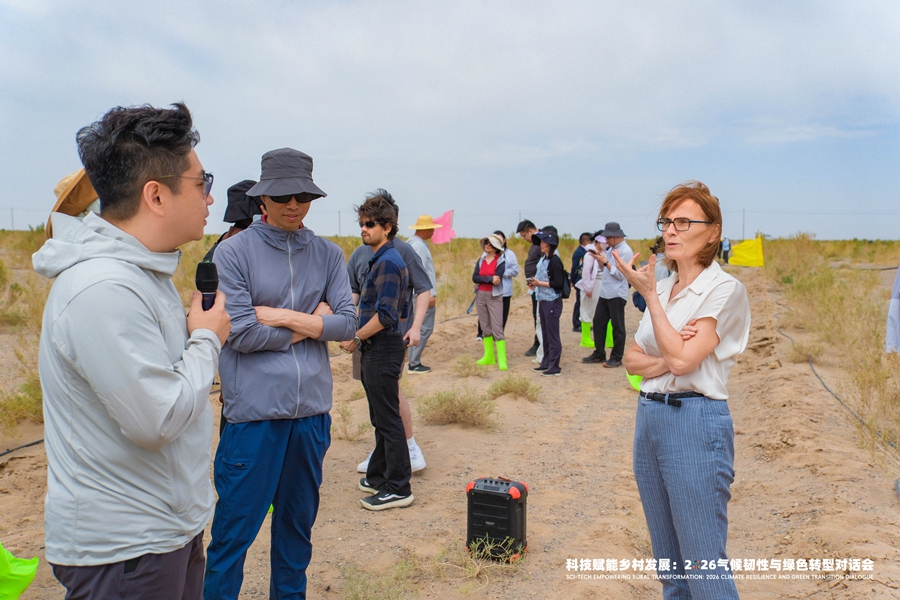
Sci-Tech Empowering Rural Transformation 2026 Climate Resilience and Green Transition Dialogue attendees learn about local cultivation practices at the Ant Forest project site in Jinta on June 5.
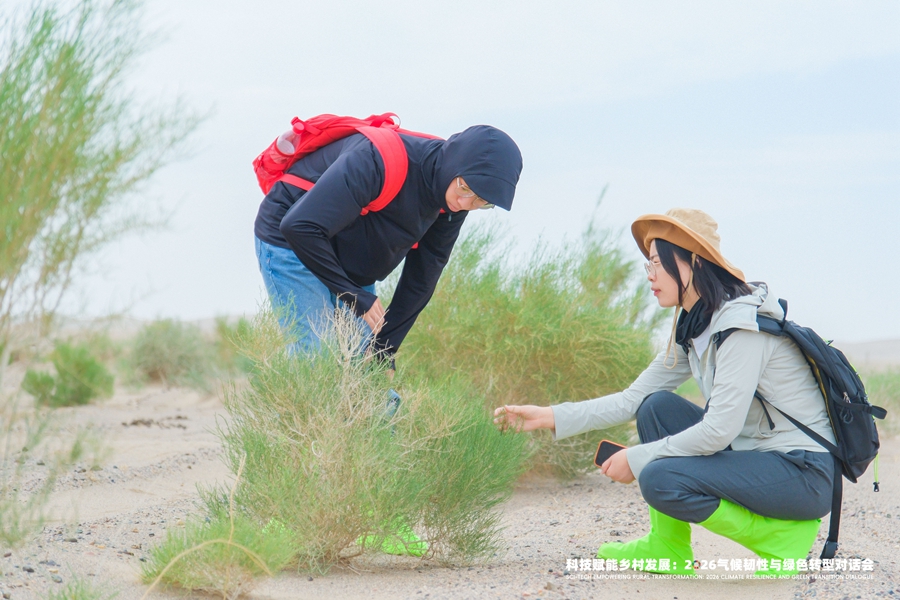
Two of the Sci-Tech Empowering Rural Transformation 2026 Climate Resilience and Green Transition Dialogue attendees that visited the Ant Forest project site in Jinta observe saxaul trees in the area on June 5.
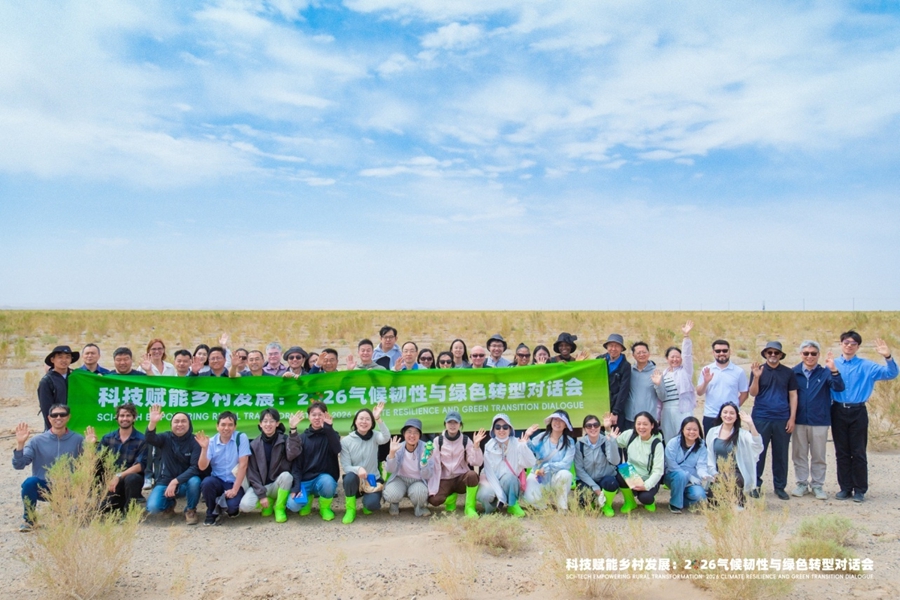
The Sci-Tech Empowering Rural Transformation 2026 Climate Resilience and Green Transition Dialogue attendees that visited the Ant Forest project site in Jinta pose for a photo on June 5.
Ant Forest has supported large-scale public-interest saxaul cultivation in Jinta in partnership with the China Green Foundation – a civil society organization that promotes greening and afforestation as well as environmental awareness – since 2019 in order to help reduce desertification and improve the local ecological environment while enabling local farmers to generate additional income by cultivating desert-broomrape on the roots of the trees that are planted.
To date, Ant Forest has committed approximately 120 million yuan in support of the planting of over 23 million saxaul trees across more than 230,000 mu (15,300 ha) in the county. The trees growing on around 75,000 mu (5,000 ha) of this area have been inoculated with desert-broomrape.
Today, Jinta is the largest and most productive area in which saxaul is grown in conjunction with locally managed desert-broomrape cultivation in the Ant Forest program.
The Sci-Tech Empowering Rural Transformation 2026 Climate Resilience and Green Transition Dialogue was organized by the China Internet Information Center (CIIC), the Food and Agriculture Organization of the United Nations (FAO) Representation in China, the International Fund for Agricultural Development (IFAD) China Office, the Centre for Sustainable Agricultural Mechanization of the United Nations Economic and Social Commission for Asia and the Pacific (ESCAP-CSAM), and the United Nations Development Programme (UNDP) in China. It was also supported by the China Green Foundation and by the Ant Forest Foundation.