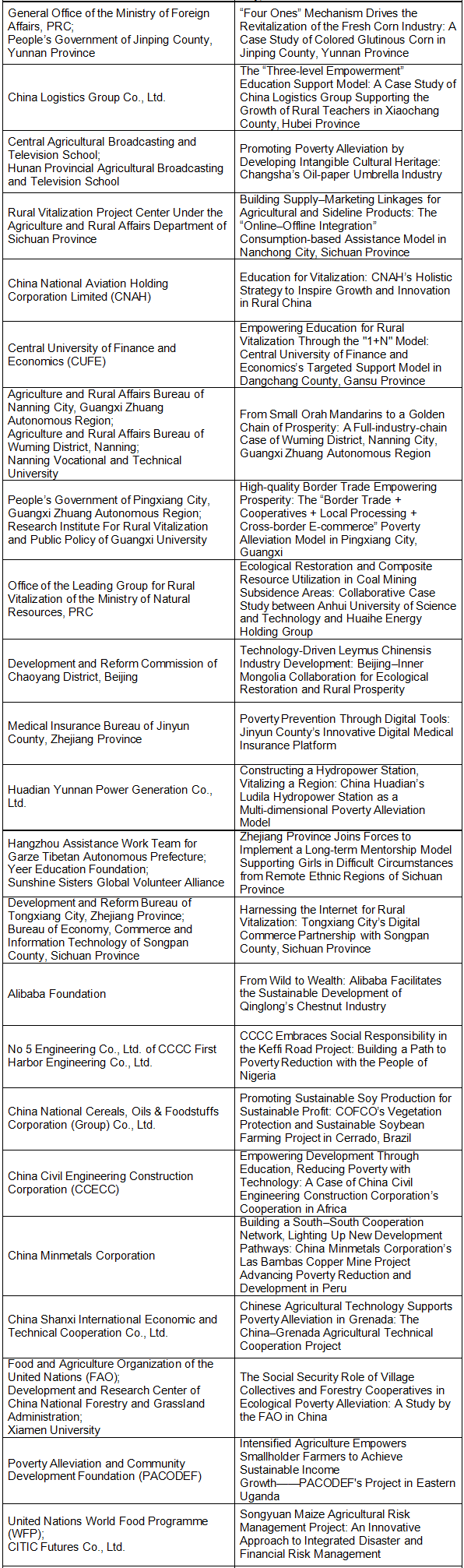
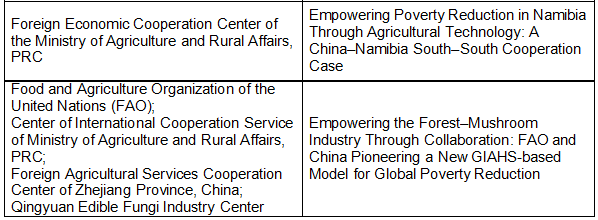
The 2025 International Seminar on Global Poverty Reduction Partnerships was held in Beijing on Wednesday, announcing the list of award-winning case studies from the sixth call of the Global Solicitation on Best Poverty Reduction Practices.
With the theme “Strengthening Partnerships to Address Poverty Reduction Challenges,” the seminar aimed to explore collaborative approaches for advancing global poverty alleviation. It was co-hosted by the International Poverty Reduction Center in China (IPRCC), the Food and Agriculture Organization of the United Nations (FAO), the International Fund for Agricultural Development (IFAD), the World Food Programme (WFP) and the China Internet Information Center (CIIC).
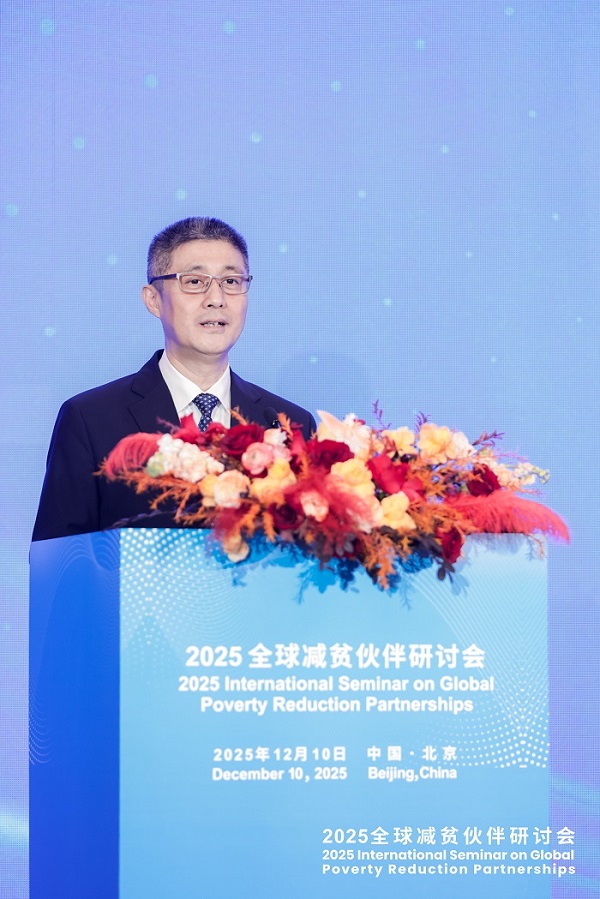
Gao Anming, editor-in-chief of the China International Communications Group (CICG), delivers a speech at the opening ceremony of the event.
Gao Anming, editor-in-chief of the China International Communications Group (CICG), noted in his speech that CICG, as a key institution in China’s international communication efforts, has long been dedicated to promoting the exchange and dissemination of poverty-reduction and development experience between China and the wider world.
Drawing on practical insights and innovative approaches to strengthening global cooperation on poverty alleviation, Gao offered several proposals: building an open and inclusive knowledge platform on poverty reduction and encouraging more countries and institutions to contribute case studies and share data to enhance the accessibility and applicability of knowledge; advancing technological empowerment and capacity building by leveraging tools such as artificial intelligence to develop more convenient, low-cost decision-support products that could help improve the efficiency of grassroots practitioners; and fostering youth engagement and innovative communication to cultivate a new generation of poverty-reduction talent equipped with both global vision and practical, local expertise.
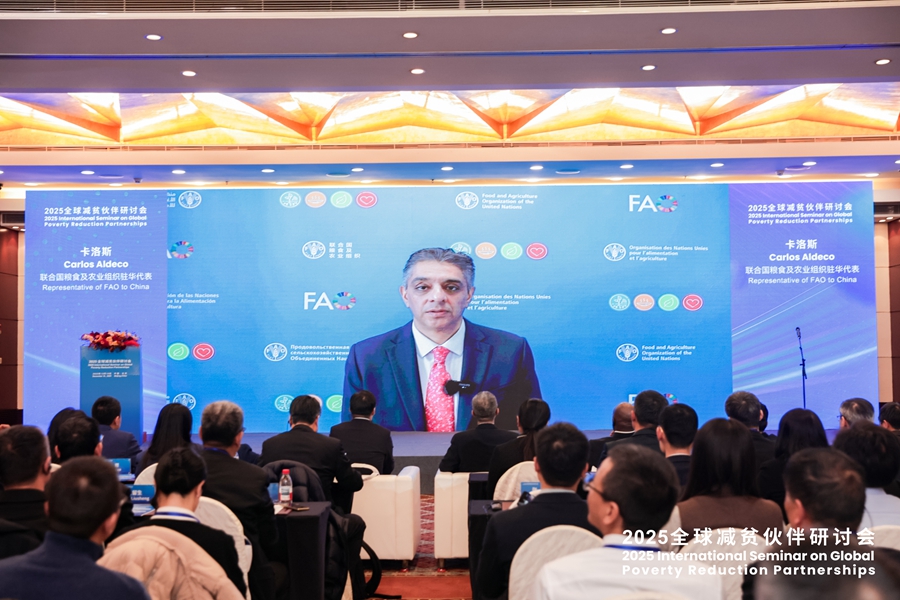
A pre-recorded video message by Carlos Aldeco, representative of FAO to China, is delivered at the opening ceremony of the event.
Carlos Aldeco, representative of FAO to China, said in his video address that today, poverty is increasingly concentrated in rural areas, fragile states, and regions prone to climate shocks. The majority of the world’s extremely poor still live in rural areas, relying primarily on agriculture and rural economies for their livelihoods. “The message is clear: ending poverty requires transforming agrifood systems to ensure better production, better nutrition, a better environment, and a better life for all, leaving no one behind,” he pointed out.
“When investments in agriculture are combined with multisectoral approaches---creating jobs, fostering economic diversification, and investing in people---pro-poor rural growth can flourish, helping communities break free from poverty and hunger,” Carlos added.
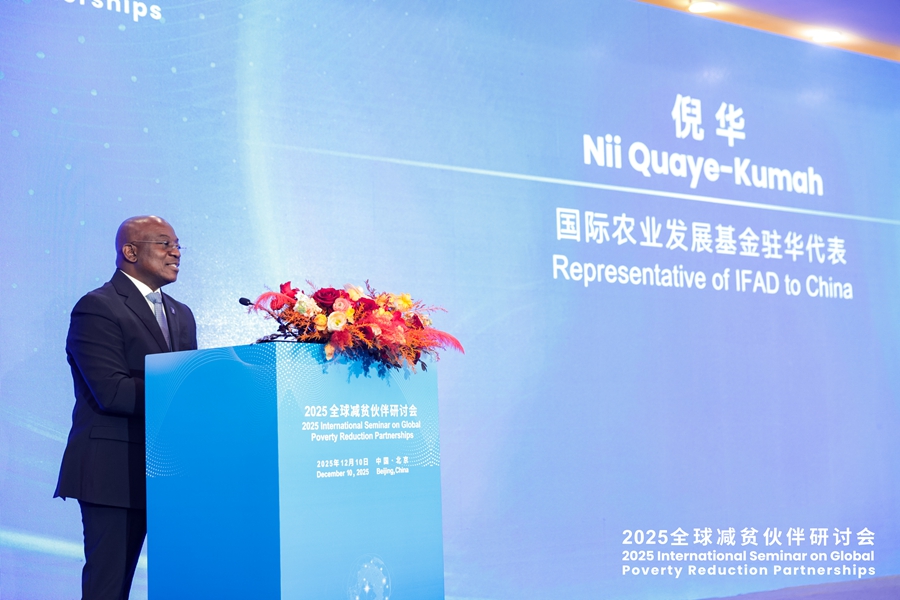
Nii Quaye-Kumah, representative of IFAD to China, delivers a speech at the opening ceremony of the event.
Nii Quaye-Kumah, representative of IFAD to China, said in his speech that IFAD is increasing emphasis on help smallholders de-risking through financial tools, insurance, adaptation, and stronger institutions. Projects integrated risk management have achieved better results. Building resilience requires integrated, context-specific interventions that address exposure to multiple shocks, adaptive capacity, and recovery over both the short and long term.
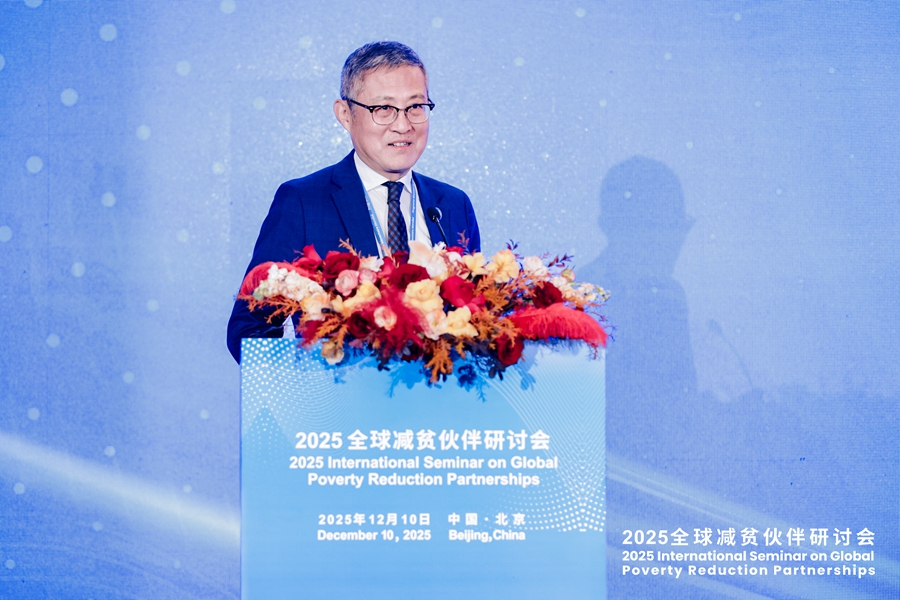
Zhao Bing, representative of WFP to China, delivers a speech at the opening ceremony of the event.
Zhao Bing, representative of WFP to China stated that in China, WFP’s Centre of Excellence for Rural Transformation serves as a dynamic hub for South-South Cooperation, facilitating the exchange of China’s expertise in areas such as e-commerce for smallholders, post-harvest loss reduction, and climate-smart agriculture. “We are actively supporting the goals of the Global Alliance against Hunger and Poverty by aligning our country’s strategic plans with its objectives, focusing on creating synergies that maximize impact on the ground. Our collaboration is focused on building resilient food systems that can withstand shocks, ensuring that the most vulnerable are protected and empowered to become agents of their own development,” he continued.
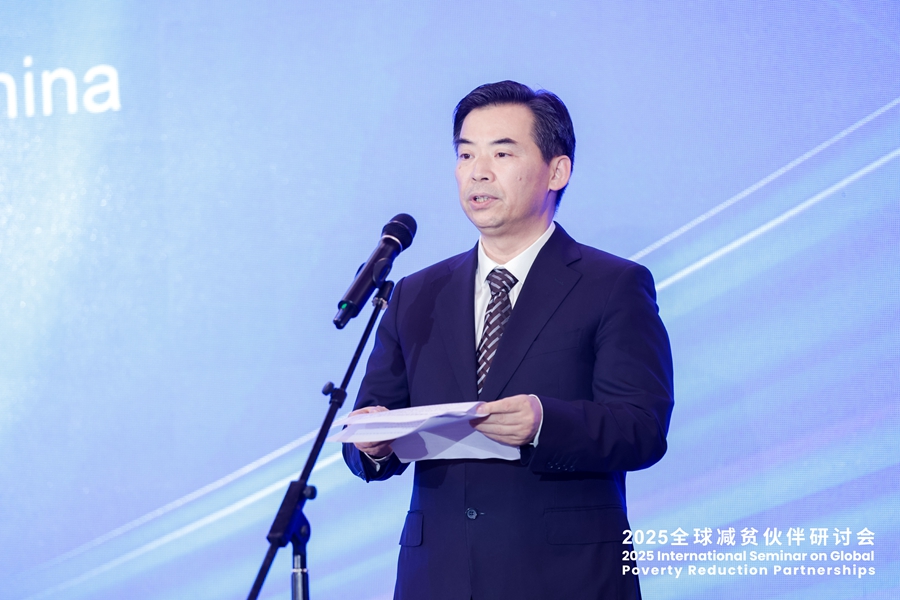
Liu Junwen, director-general of the IPRCC, chairs the opening ceremony.
During the seminar, participants agreed that, in the face of mounting global poverty reduction challenges, strengthening international partnerships for poverty reduction is of critical importance. They stressed the need to promote exchanges on poverty reduction experience, innovate cooperation models, and jointly advance the global poverty reduction agenda, to contribute to the achievement of the United Nations 2030 Agenda for Sustainable Development.
Representatives also shared cases on a range of topics, including China’s agricultural technical assistance projects, vocational education support under China’s East-West cooperation mechanism, and initiatives by international organizations to empower smallholder farmers for poverty reduction. These examples showcased innovative approaches and practical experience from different stakeholders in advancing poverty reduction on the ground.
On the sidelines of the event, the seven hosting organizations of the Global Solicitation on Best Poverty Reduction Practices, namely the Asian Development Bank (ADB), the CIIC, the IPRCC, the World Bank (WB), and three Rome-based UN agencies -- the FAO, the IFAD, and the WFP, jointly released the Global Poverty Reduction Case Series 2025, announced the list of award-winning case studies from the sixth call of the solicitation, and launched the seventh round of it.
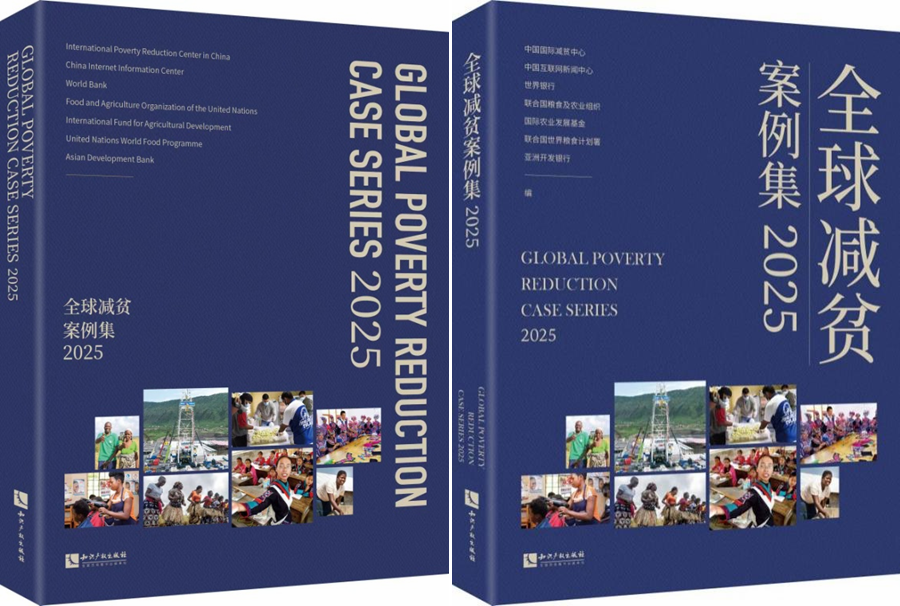
The cover of the Global Poverty Reduction Case Series 2025
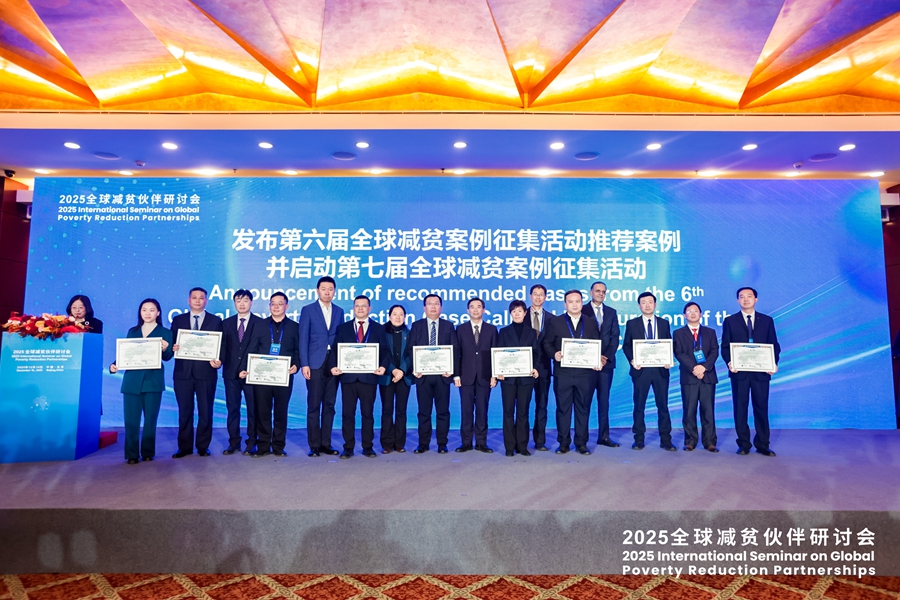
Individuals and representatives of organizations that submitted case studies during the sixth call of the Global Solicitation on Best Poverty Reduction Practices and other attendees pose with award certificates at the event.
Initiated in 2018, the Global Solicitation on Best Poverty Reduction Practices aims to inspire individuals and organizations worldwide to submit case studies that can serve as valuable reference materials. This initiative also seeks to foster innovative global partnerships in poverty alleviation, leveraging the strengths of various stakeholders.
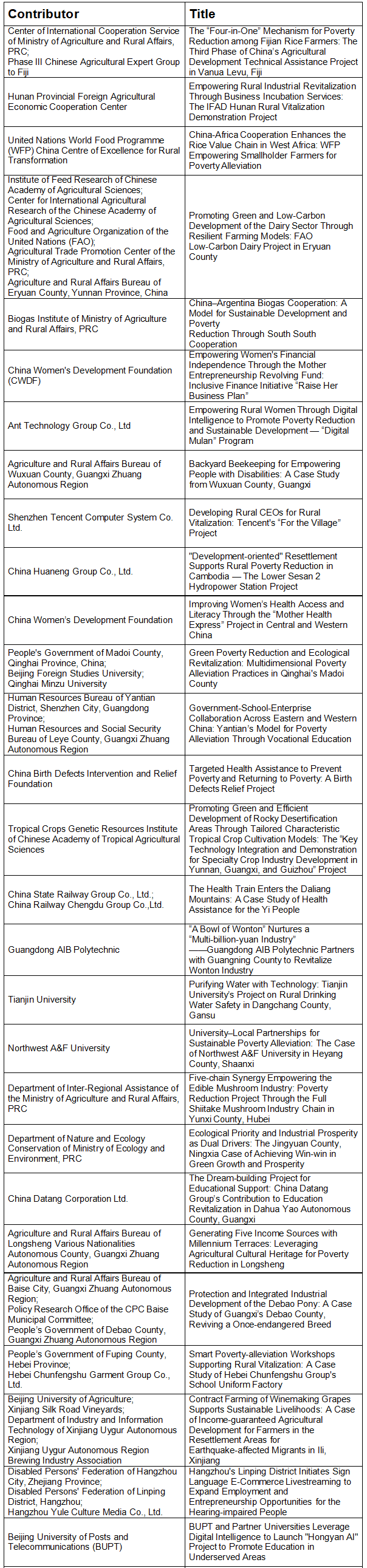
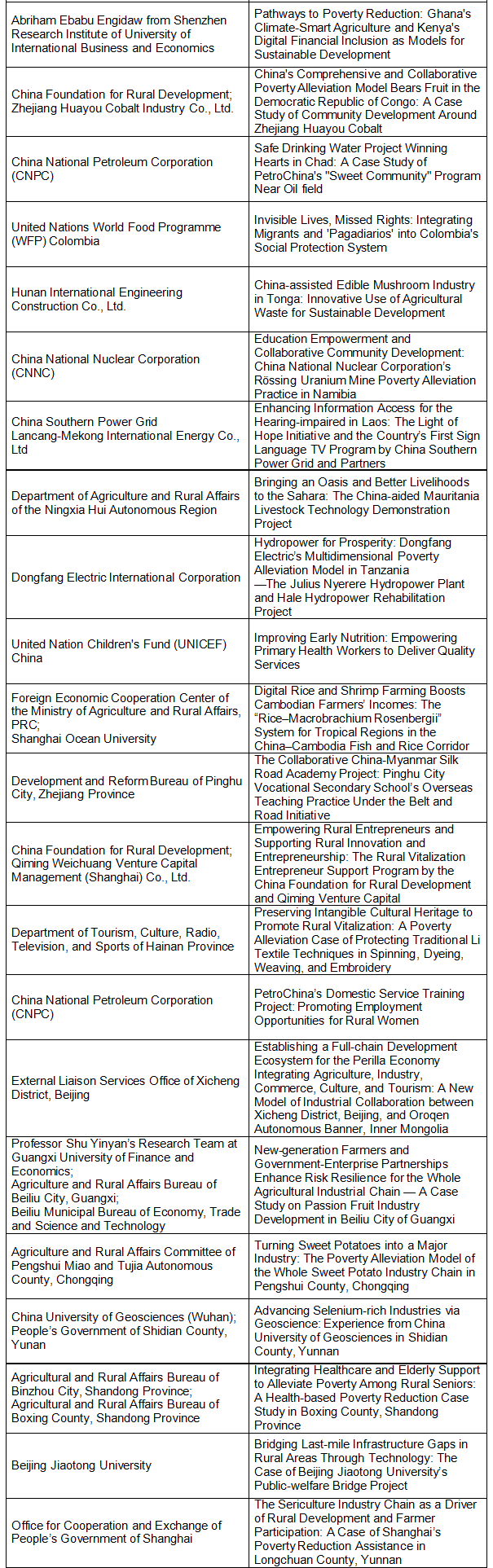
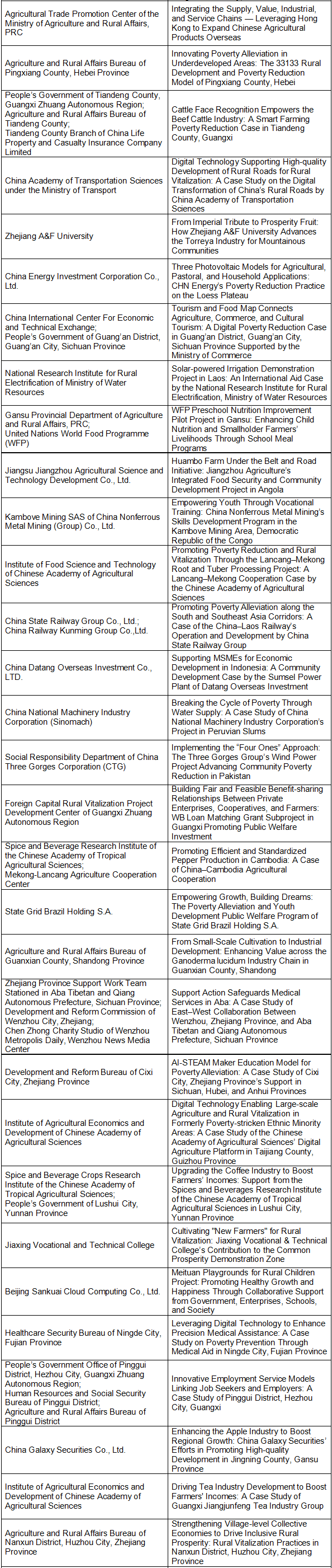
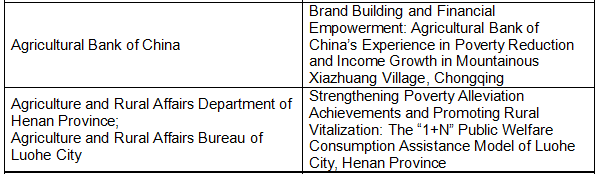
The sixth call for submissions was launched in October 2024, generating 840 entries from 40 countries and regions, including Ghana, Kenya, the Democratic Republic of the Congo, Chad, Namibia, Ethiopia, Tanzania, Nigeria, Uganda, Laos, Indonesia, Cambodia, Mauritania, Bangladesh, Nepal, Brazil, Peru, Argentina, Grenada and China. From these entries, the host institutions selected 108 best practices that are sustainable, replicable, practical, and inclusive for vulnerable groups. These selected ones provide valuable models and implementation strategies for those dedicated to poverty reduction efforts worldwide.
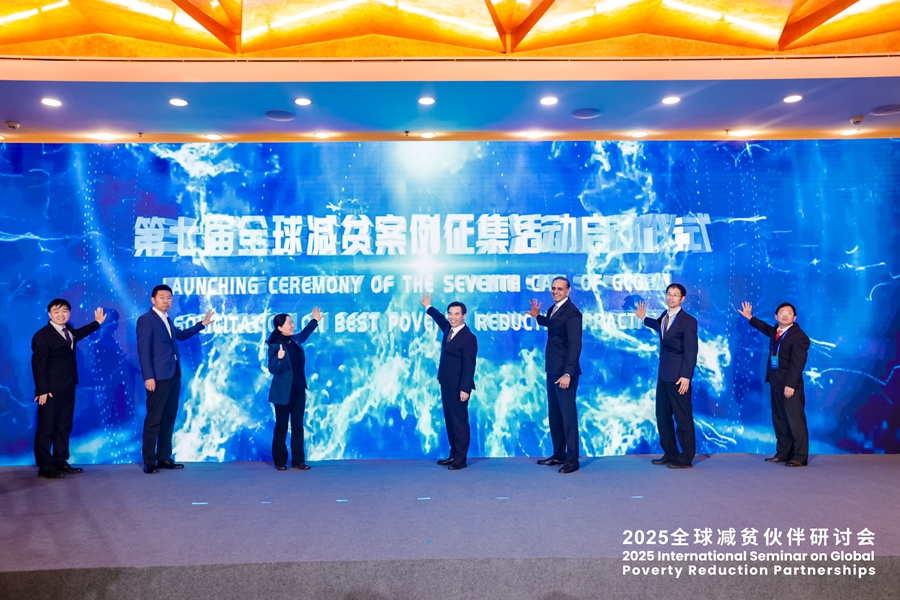
The seventh round of the Global Solicitation on Best Poverty Reduction Practices is launched at the event.
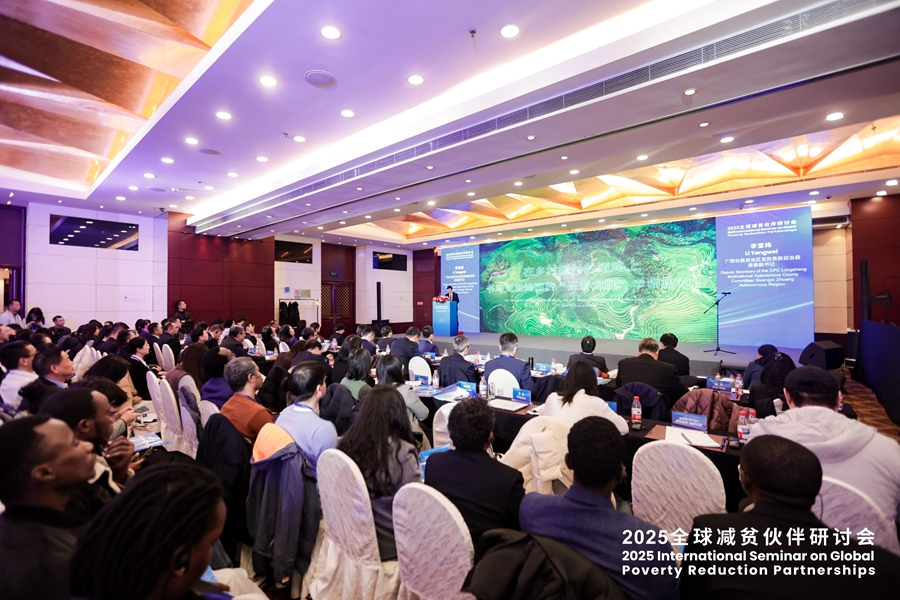
The 2025 International Seminar on Global Poverty Reduction Partnerships is held in Beijing on Dec. 10, 2025.
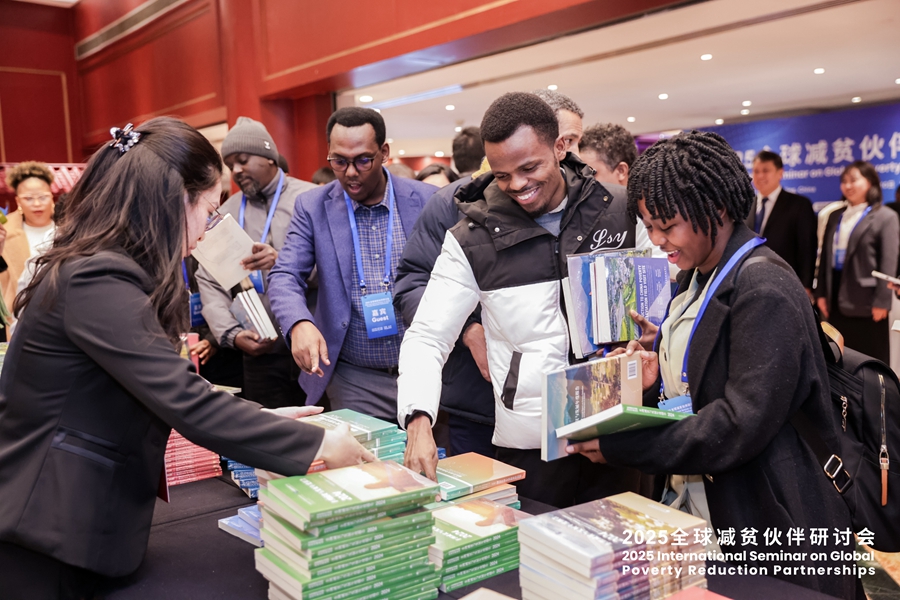
International representatives read books at the book display area featuring China's poverty reduction experience at the venue of the 2025 International Seminar on Global Poverty Reduction Partnerships.
The seminar brought together nearly 200 participants from 17 countries and 7 international organizations, including government officials and diplomats stationed in China, and representatives from social groups, research institutions, enterprises and media outlets, as well as international students.
Award List of the Global Solicitation on Best Poverty Reduction Practices (Sixth Call) (in no particular order):